Design Practice I
Masters
Week 1 - Raiding The Pantry
Documentation of Artefacts and Experimentation of Methods and Processes

Throughout this first week we were tasked with creating 51 artefacts with constraints of time, and dimension to begin our design thinking by designing through making, a practice I have experienced with through my undergraduate programme in Industrial Design. Throughout this experimentation they encouraged us to think about new and different processes that we might not have used before to expand our palette of design methods in the available workshops and facilities we have here at AUT.
We were also given a list of words to dissect to focus on throughout our experimentation. I chose the words Raw, Readymade and Processed. Focusing on these words allowed me to see these artefacts as a growing form of the design process, starting from a raw undefined idea and the beginning stages of a design process to then growing and forming this idea to something that has already been processed that has been tested but not finalised to look at a clearer idea formed and how that can be seen in context to my research idea. And readymade looks at what the current interactions are and how can I break them down and understand them to look at them from a new and different lens to place them within a new context.

Raw
-
Genuine
-
An idea
-
Unrefined
-
Concepts of prototyping, cardboard etc.
Readymade
-
Conventional methods
-
Refined to a new context
-
Innovative thinking
-
Building from an idea
-
Integration
Processed
-
Refinements
-
Tested interaction
-
Defined as clarity and development
Methods and Processes


Sketching
When this project was presented to us I approached it as a chance to develop skills and techniques that I haven’t had the chance to develop before during my undergraduate degree. Sketching was a practice I wanted to get better at to improve generating my ideas and putting them to paper as a means of visualisation. Learning to sketch cars gave me confidence in understanding shape and context of my design field and with cars there are proportions and angles that are both unnatural and rigid often combining the two allowed me to see how different design elements readymade in the cars design can draw an understanding from me about the context of cars.
3D Modeling Functions
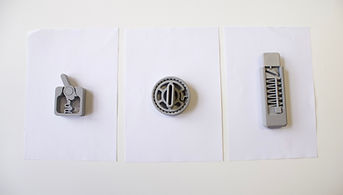
I wanted to use 3D printing as a way for me to understand functions within the car and throughout automotive transport to gain a deeper understanding of the tactile and interactive elements that are used within transportation that give the driver feedback depending on the function eg. Indicators, temperature knobs, hazard lights.
Understanding the tactile nature of these objects will give me more context of why the interactions may be “satisfying” and how this gives users the impression of security and control over their actions. As well as having an example of tactile analogue functions that are better understood having a model of oppose to the idea of them.


Visual Graphic Language
Visual Graphic Language was something I wanted to explore through the use of laser cutting, as the interface within the car is filled with graphic symbols and visualisations of danger, car maintenance or general information can be hard if the language is never taught to people.
I wanted to explore how this language can be viewed and explored for the context of drivers and if this was a viable form of design language that is universal for drivers and if so, why? And how can this be better understood? Do people know what these symbols mean in the context of a car? How can there be a balance of information and visual representation without overwhelming the driver with distractions while driving.

Observational Analysis
I use Observation as a means to gain perspective on the current contexts of where I desire to work within, understanding current interfaces and information given to the driver and even how it relates to the passenger.
Comparing what is seen as a ‘standard’ car interior vs a ‘racing’ interior we see how much of the car is deemed ”essential” compared to the things needed for luxury, comfort and day to day life between these two cars I began to see and recognise the difference between what is essential for driving the car (racing) compared to what is needed to live in your car (commercial). Even choice of materials, simple functions and need for passenger entertainment are all challenged when the environment of the car changes context.


Prototyping
When understanding different functions in the car in which the driver has full control over the main function seen between the driver and their vehicle is in the steering wheel. When exploring this there was 2 versions that had lots of interaction and function between, the modern classic steering wheel and the more advanced racing wheel. Within context these two wheels give the driver function without removing their hands off of the steering wheel to minimise distractions while driving.
An insight I saw when creating the modern steering wheel prototype was the nature of the horn, as one of the few means to communicate with another driver on the road it presents itself as an aggressive tool, being used in an aggressive way to responses of other drivers driving. As an action it mimics aggressive behaviour as supported also by the aggressive noise that follows to support this action. As understanding driver behaviours through drivers I argue the design of this function in the modern car.
Feedback and Reflection

Feedback given were a mixed response in suggestions into where to explore next as well as well as explorations into different mediums. With suggestions to look into metal, plaster and clay and thinking of other contexts such as safety features, understanding navigation easier and understanding symbolism within the environment of car and automotive design. There was also a suggestion by Kanav to look into significance of cars, the philosophy behind how they are thought of in society today and what that entails for their definition to the wider society looking into perception and thinking of how cars are thought and perceived.
Reflection
Though I know the area I want to design for as shown in my research question and initial proposal I am open and broadly considering my options within where I would like to design and for what purpose also. Expanding on my insights through my artefacts I look to deepen my research question and focus on a more specific problem. I have an interest in understanding interface and the growing nature of technology integration within modern cars and what that means for drivers and the experience of driving, allowing the driving experience to go hand in hand with the direction of automotive innovation. Though there are still many avenues I want to explore, such as soft materials and driver seating and materials as another means to move towards which I would like to explore through making. I have noticed the difficulty in having a range of options to design towards without a clear vision or focus to lead my design journey, although the pressure is mounting in where I want to explore I want to focus on current design practices and the industry techniques used to get a deeper understanding of how cars are designed and made which may be a focus for the next iterative stage of this paper. Though there are lots of thoughts I believe there is steady progress in my journey and I look forward to going deeper in deciding what I want my project to develop into.
Week 2 - Cooking with Gas
Refined Intentional Practice Through Making

As we move from week 1 to two there was a call to refine our work further through the methods we have learned in week 1 and go deeper with our research and exploration throughout this week. Through broad exploration and contextual analysis of design opportunities within the car interior I look to see where design is being produced within modern cars today. With manufacturing techniques ranging from 3d manufacturing to returning to the basics in shaping and moulding the car I put my practice through this focus this week.
Amalgamate
-
To combine, unite or merge two or more things into one
Layer
-
a thickness, coating, or level of material that covers a surface
The ingredients I have chosen were Amalgamate and Layer, looking at how I want to explore the manufacturing techniques within the automotive industry and their practice in relation to my own. Looking at these ingredients as means to combine techniques, understand interactive properties and the processes of automotive design. Amalgamate looks to understand methods in relation to one another, how they elevate the making process through the strengths of one another, through this I look to combine forms, techniques and refinement of ideas to multiple stages. Layering looks to explore materials and interactions within the car, materials that covers a surface that drivers will interact with throughout the driving experience.
Methods and Processes


Amalgamation of Prototyping and Clay Modelling
Prototyping and clay modeling
Initial cardboard prototyping framed the base of my exploration into form giving and manufacturing techniques looking to amalgamate this practice with clay modelling a technique used my automotive designers as a means of form giving, testing and faster iterations and developments to design changes. Techniques used in this capacity interest me as it explores different mediums in the context of car design that step away from digital mediums and look to human imperfections and craftsmanship to develop a concept/idea.
Throughout the manufacturing of my medium there was much time taken to explore shaping, form giving and understanding structure in creating a prototype to move forward with and the difficulties continued to add when introducing clay into the mix as the different techniques used to create form and depth began to interfere with one another, such as removing of material would expose the structure underneath or the combining of paneling proved to be difficult in creating a smooth finish to the prototype which lead to a final artefact that exposed two different stages of the iterative process which for an artefact shows processes used and development overtime but for a technique is difficult when mixing and combining different mediums with vastly different making techniques.
Soft Material Exploration
Exploration into soft materials looked to understand and improve how materials used in the car were created and what mediums were able to be extracted and explored from it. Through a previous project involving New Zealand strong wool I wanted to bring that practice into automotive design to explore the mediums being used in car upholstery and seating.
Through making and discussion with technicians and exploring soft materials as a medium there were different suggestions into the manipulation of fabric to fit within this context. As an explorative thinking of sustainability I asked about the replacement of synthetic foams and the nature of waste and toxic materials used in car design. The difficulty presented by technicians Finn and Dan was the ability to extrude and give structure to soft materials especially strong wool as its inherit nature is to settle and rest rather than stay rigid and hold form, techniques discussed were wet felting to give structure through weaving of fibres and fabric manipulation through heat setting, though I wasn’t able to explore due to constraints on equipment and time I look to explore these medius in the coming weeks


Contextual Sketching
Bringing techniques used through sketching in weeks 1 and applying them to the context of interior design gave context to my design environment and the ability to put to paper ideas and concepts for when I move into iterative and explorative design with a more deeper research question in mind.
3D Texture Modelling
Understanding touch through textures is a medium unexplored just yet and when looking into fabricating texture within the medium of 3D modelling it is something I have not been able to learn or explore yet. Understanding textures as an inherit connection for tactile understanding through touch is important when designing for interactions between people and vehicle and learning to fabricate them will be useful moving forward.
There were complications when attempting to model textures in Rhino (3D modelling software) which were the commands and understanding how to use new controls that I had never attempted before. When introducing myself to these techniques there was a steep learning curve with techniques not even being explored such as grasshopper as it was too difficult in the time restraints. My artefacts are a combination of understanding methods and techniques while also creating a foundation into making textures through 3D modelling.


Role Playing and User Observation
One thing not photographically documented was the ability to role-play and put into context possible users and user groups in car maintenance when doing so with my car over the weekend. As the opportunity presented itself I was able to put into context the tools, techniques and functions it takes to maintain a car by rotating wheels, oil changes and maintaining air pressure.
Throughout this process I was putting myself into context of someone who didn’t know how to maintain their car and the things needed to look after a car but also through the difficulty in which it had to be done, by doing so throughout the maintenance of the car I gained a context for someone who might not have the knowledge or the tools, even the capabilities it takes to maintain a car. This began an empathy journey, to understand the needs of others as well as give me knowledge on what it takes to be in someone else’s shoes who is not able to maintain a car due to these constraints.
Feedback and Reflection

Throughout feedback of artefacts there was general positive responses to the artefacts presented and the ideas that were talked about. However one thing was prevalent which was the focus, the target audience and the way the practice tied back to the research question. There were many clues they picked up throughout my presentation on the what and how I was designing for but it was missing the why and who. I hadn’t identified a key demographic, as well as a specific problem I was trying to address and it was clear from the artefacts I was presenting. There were questions on developing a key idea, key audience and practice that supported this. As I looked at explorative I believe I was lost in where this exploration was meant to be going and where it was to be focused upon. As I move froward with this project and into the research and practice of week 3 I need to identify and clarify these questions and begin to design and create around those because otherwise it begins to get lost and I myself understand how their perception of my work was confusing despite the strong presentation. Simplifying it, and directing my work to a more suitable outcome. With key audience, question and context in mind.
Reflection
Through feedback from my peers there was a quality highlighted of ‘craftsmanship’ which was interesting when looking into the production and manufacturing of automobiles. As I look to integrate this idea into my work I see how connection through making is craftsmanship and how this can be applied is through more making with intention as said in the feedback before.
Throughout the week I notices 2 things, 1 the difficulty in creating for the field I want to design for and 2. The lack of focus in relation to a research question. When practice and intention don’t go hand in hand it creates a difficulty in knowing what and how to ideate becomes more lost and stagnant.
Week 3 - The Progressive Dinner
Concentrating Project direction and Defining Project Identity and purpose

Design Practice in week 3 looks to deepen an understanding between myself and the material given, questioning my decisions and purpose for designing in my chosen field and developing a research question that connects deeper with my practice, research and contextual review. This week I explored an analysis of current vs classic interfaces of interior car design as well as material explorations into the materials, techniques and introduction of new materials within the interior car space.
Research Positioning
Before continuing to make, a key question and idea that I decided to look into was the meaning behind my practice. As reflected upon before there is a lack of cohesion within my work as seen through my broad exploration and experimentation within the given work. As I look into the processes and interactions between designer and car, driver and car, and even passion and car, there is still a broad scope that my project can go towards that needs to be focused to develop a more focused project and direct my making better.
I began with a brainstorm, identifying the core identity of my project, my initial research proposal and questioning my practice and my research so far by asking questions in Creative Design Practice like “So What?” To urge the need for meaning throughout my work. Doing this helped me to identify the areas of my project that I am have been lacking to focus my practice on and allows my research to be more heavily influenced through a more identified research question and elimination of unnecessary focuses for my practice and research.

Who?
-
Car Enthusiasts, those who want to preserve and experience driving more than others
What?
-
The evolution of technology integration and its role in the historical lineage of automotive design within car interface and interior design
-
How its evolution affects the historical and cultural contexts that have created this community in the first place
-
Where?
-
Focusing on the car interior, driver and passenger seating and its role in the evolution within the technological integration and reliance in automotive design today
How?
-
Emphasis on craftsmanship, through the way cars have been manufactured in the past and how the connection between designer and driver customer can communicate design choices and
When?
-
Future focused with an emphasis on honouring the past. Looking backwards on automotive design and philosophy of past designers and how it can be translated in contrast to the changing and evolving nature of the technology advancements in interior car design.
Through this I was able to identify my Why? and question it through my So What? To help create and form my working research question and direct the focus of my research moving forward.
Why? / So What?
My Project aims to design for people who want to preserve the culture and heritage of automotive experience and design while embracing future technological advancements in automotive design.
My Motivation stems from the heritage and culture of automotive design being lost as cars evolve and how this is reflected in the integration of technology within the interior car space which has led interior car designers to design for passengers rather than drivers through the technological movement of autonomous driving and the abandonment of human interference within autonomous driving.
My research will focus more on the critique of current trends and designing a car interface that is receptive to the interactions and needs of the driver rather than adhering to the trends of the automotive industry today and will draw from past automotive design philosophies to see the need for human interaction and control within the automotive space opposed to the current trend of autonomous driving seen today.
Current Research Question
Understanding the relationship between user and vehicle, designing in context to future technologies, user experience and understanding the language within the automotive experience
After Identifying my why and beginning to focus in on a specific area within automotive design I began my week 3 practice through this understanding and put more emphasis on driver interactions and the current vs future trends of interior automotive design.
Culture
-
Preserving the culture of interior car design and automotive design within automotive contexts. Culture of automotive design and its affect on consumers.
History
-
Understanding historical contexts to further my work rather than to take away from it. Past understandings to influence future trends
Physical
-
Restoration in physical interactions to aid in driver safety and seamless interaction between functions
Temporal
-
Looking at the fleeting nature of older interfaces and identifying the flaws within current and future focused designs.
Through these chosen words and a clear identity of the research project and question at hand my artefacts this week look to identify current interfaces and how information is seen to be displayed and read as well as a material exploration into the soft materials found within interior automotive design.
Driving Interface and Identity of Automotive Cars
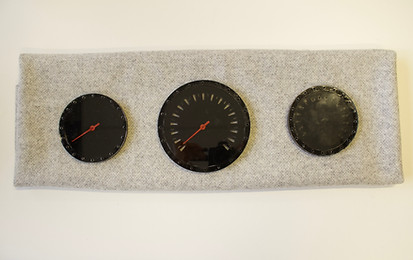
Using Laser cut acrylic and replicating visual identities of modern and historical dashboards for speedometers and gauges I look to identify current interfaces and understand both the visual identities of older dashboards and see the visual identity of modern dashboard digital mediums. Through this making there were identities created to understand the visual language performed by both artefacts, older dashboards and gages have set functions, telling the driver about speed, fuel, rpm and temperature gauges all have set identities and functions that inform the driver about the condition, speed and maintenance required for the car at a given time, these functions were minimal and simple but they were clear and simple for the driver to immediately understand and respond to.
Modern displays however take on a different approach, with only a screen as a physical medium they rely on digital language and visuals to display and inform the driver about the conditions of their car, though this has been used in cars for years now the reliance on digital mediums has not, manufacturers integrating more features and extending this dashboard further past the driver to display interior functions within the automotive. Cabin temperature, airflow, radio, car play and many other feathers are being integrated into the screen which questions both the discontinuation of physical functions within the car as well as the importance of driver verses passenger importance for information displays within the car cabin.


Soft Material Swatches and Exploration
Through a refined focus on the relationship between driver and machine I look to other features within the interior car space which I haven’t explored yet which led me to creating swatches of soft materials that could be explored for the car interior. The goal of this was to see how texture, cushioning and connecting techniques and how this physical interaction can be better integrated or how the current materials that are used can be explored further. Although this was still an explorative artefact I believe it was necessary to explore the different interactions seen within interior car design.
Feedback and Reflection

When discussing my work through a feedback session done in week 4, there was many questions and insights of the position of technology as a part of the driving experience with relations to AI focuses and systems of entertainment however there was discussion into where this can help shape focus within my chosen context.
Questions and thoughts from my feedback group:
-
Over reliance of technology, peoples car (not dealerships)
-
Problems with AI driving now, following roles to a tee rather than have intuition and adaptability.
-
What’s an advantages/disadvantages of accessibility controls
-
Whats the balance that causes good driver experience with analogue vs screen?
-
What gives an individual support vis driving?
-
Which group are you focused on? Eg. People with mild blindness
-
What would make lazy passengers into willing to drive?
-
Why are we telling people to not drive and txt (be on their phone) while giving them the tools to do so anyways? Where is this relationship?
My group was a predominantly animation and storytelling background which was different as I was used to a more industrial and product designed focus so expanding my range of feedback to not only how something functions and works but also in the narrative, storytelling and conveying of emotions that this experience might bring. Through their knowledge of storytelling they looked at the aspect of relationship with technology and that connection through context to the way technology is integrated into driving through AI driving and even through our reliance on it, using examples such as Tesla owners and the societal interpretations of their interaction within their vehicles.
This was a perspective I didn’t consider before, rather looking at how to integrate the past with the future and looking backwards rather than forwards in time. When looking at the context of car design moving forward I have to look at the benefits and negatives of how technology is being used within automotive design whether it be accessibility or assistance on long commutes the integration of positive technological advancements that assist this need to drive have to be considered when designing for automotive interiors.
My feedback session with Rachel proved evident as well in the direction that was needed to be taken for my project and project outcome. Rachel emphasised a need for contextual contexts, looking towards the cultural and historical evolution that has transformed the automotive industry to what it is today. Highlighting a need to look at manufacturing, cultural takes on automotive manufacturing and philosophies that culture imparts upon this industry as different cultures have different needs and desires that are needed when designing a car. Rachel’s insights demonstrated that there is still a need to look deeper, look beyond my practice and experimentation and look to the root of why designers and manufacturers of the past designed their cars the way they did, when translating this to future forward thinking there is an emphasis to draw from these designers and the contexts of their respective era’s to bring forth into modern identities of automotive design.
Reflection
I believe it was important to establish where I am in my project as well as the importance of where the direction of my work was to be heading throughout this paper, with a more refined focus and establishing a foundational research question to focus my research around I believe it has set my practice and direction of my practice. However my practice this week wasn’t a clear reflection on this new direction, as I still explored broad scopes within my chosen niche of the car interior. And although this is still key in understanding the processes of certain areas within the interior space of a car I believe it reflects less on the interactions behind the driving experience and the driver itself, and though material exploration and interactions reflect the physical component of my hunch I still question how to design and create artefacts that directly affect driver feedback whilst in the act of driving. My feedback gave me valuable insights into more of the assumptions and perspectives that I haven’t considered as of yet, the current design movements of technological integration in car interiors, distractions from driving, purpose of autonomous driving are insights that make me think more about the area I intend to design for, questioning the purpose behind my initial brainstorm done this week of who, what, where, when, why and so what?
Week 4 - Cordiality
Final Week of Making, Identifying Key Processes to Develop Artefacts
Current Research Question
Designing for car interiors and the relationship between driver and vehicle as as critique of current technological focus in car design
SubD CAD Modelling Learning
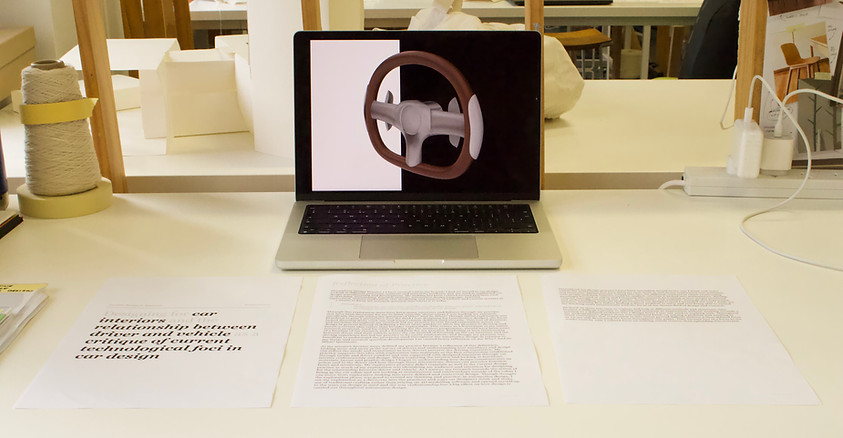
Building from my practice from the previous week I looked to at different modelling processes that can help me design and form parts in quicker succession, as my CAD modelling skills are still developing I looked to learn about a new way of CAD modelling called SubD modelling.
The idea for this week was to learn and understand a faster method in putting ideas into a 3D model and through SubD modelling will be able to produce faster iterations of designs. This week was learning about the basics and translating that into a product which was chosen to be a steering wheel. This model making technique is more difficult but through more making there is evidence that it can be used to push designs and iterations of designs faster and further but will need more refinement of this skill throughout this research practice to see its fruits more evidently.


Reflection on Practice (805 words)
Throughout Design Practice 1 I have created within the bounds I had set myself in car design, looking at different processes, contexts and materials/mediums that are used in traditional car design manufacturing and development. My making has been centred around practices such as sketching, prototyping, function analysis, automotive design language, material exploration, texture exploration, clay modelling and analysis of historic and current systems as a means to focus my research question into where it is today.
Current Research Question:
Designing for car interiors and the relationship between driver and vehicle as as critique of current technological focus in car design
Through this exploration there have been many successes and failures through my practice that have been necessary for me to think critically about where I was leading my research, specifically through asking the question of Why? And So What? Though initial exploration was beneficial to gain a perspective into the field I was designing for (automotive design), the focus lacked direction from week one and wasn’t clearly defined until recently. This loss of direction and intention throughout my research led my practice to very broad exploration across car design in general instead of defining a focus more quickly to allow my practice to develop and iterate a certain idea rather than broader exploration. This comes as a frustration as my initial research proposal, used for when applying for the masters programme, should have been more of a baseline of my research and a foundation for my practice. Exploring at how relationship between driver and their vehicle across the car instead of focusing on the car interiors and the driving experience has led my practice to be vastly exploratory, and though my practice was beneficial to understand the processes used throughout the automotive design in relation to my thesis and research question development has caused heavy reflection on my Why? And So What? Questions.
As my research became more defined my practice became a reflection of this definition, looking more and more at the nature of drivers and understanding how interfaces and design can reflect the needs and importance in how drivers perceive the driving experience. My practice supports this idea with exploration into materials as the first relationship established through tactile and driver comfort and was supported with designed intention through car interior craftsmanship and design. When exploring the interior and looking at functions, materials, layout and graphic design I began to understanding how design communicates an action and to the driver and how through these interactions, drivers can perceive function faster and intuitively. My explorative practice didn’t translate as well to my current design practice as much of my exploration was identifying my audience and intention for designing for the relationship between driver and vehicle. As I narrow my research towards the action of being in the car cabin and not looking at maintenance and relationships outside of the cabin I can move from explorative making into more defined and contextual design. Though thought the exploration phase was good to extend my thinking and practice, in automotive design, I see my exploration as a discovery into the practices and ways car designers think and make use of traditional crafting rather than relying on 3D modelling software and opened myself up to the ways car design is used and the way craftsmanship has a big effect on how design is carried out throughout automotive design.
Throughout my design practice I have been extending myself in the way I think and make within the restrictions that have been set each week as well in my exploration into materials and processes. Initial practice looked into into the different contexts in which relationship with people and their vehicles could be applied, whether it looked into maintenance, driving, passenger focused or safety and balancing this research by looking at how people perceived vehicles through context of size, gender, accessibility and usability. Through this exploration and understanding methods and processes in car design is used I extended the way I made my practice, learning first before finding a direct problem to solve and now being able to extend my thinking more intentionally with the focus of my chosen field of design and research.
As much as there was time to explore and look at different methods and processes, time became a difficult restraint to uphold and maintain as exploration without working towards a solution to a defined problem was a design focus I was not used to working with. Throughout my undergraduate degree there was continual briefs on solving a problem and working to those constraints that exploration to this extent proved difficult without a clear defined focus as we are still developing the focus throughout this paper. Time became less of a focus as the weeks went by with a refined focus on making within context than upholding this restraint.


Week 5 - Preparing for Te Hākari
Presentation preparation and feedback analysis

Current Research Question
How might Interior Car Design influence the Driving Experience through Haptic Design and Proprioception Understanding to improve driver intuitiveness and response.
Feedback
Throughout the feedback sessions in week five, reflecting back on our practice in week four, there was more intention behind each feedback letter that was written which gave me great insight into the areas where I was lacking throughout my design practice and through my peers I was able to identify where my project could be further explored and where my project can continue to develop into.
Although there was a lot of work in week 3 to brainstorm and to clarify my project to not only be understood by myself but also to those who might be understanding it for the first time, throughout the session in week five there was still a lack of clarity into what the project will look like and what it will become. When reflecting on the work of my peers I see that their research question and practice greatly reflects one another and their practice is a reflection of their research hunch and research question and is strengthen because of this. My project however, though more clearer than it was since week 3 still lacked many components that specificity what my project aims to achieve. There were lots of comments understanding conversation conversations that we had in the past about how this project could look and the commentary that I could have on current society and technological integration within an automotive design, however there wasn’t a strong reflection of this idea throughout my practice which left which allowed a lot of my peers to continue to suggest ideas about my project which I had considered previously and although this was beneficial for me to consider there is still an evident lack of clarity for my project direction and it is seen most clearly through the artefacts that I have chosen and created.
Throughout the feedback session I could see a lot of depth to the thinking of my peers in terms of their feedback towards me though there was criticism and their was questions on where my project will go there was a lot of strengths highlighted as well such as my exploration into the different avenues and fields of my project when considering their opinions and possible directions my project go into it is not to see it as a fault but rather delete delete delete
Although I received alot of feedback into to where my project stands now, because of the contextual review and historical and cultural understandings that I have employed throughout my research I believe there’s still room for better communication as well as better making of artefacts to represent my research when applying this into my work. When looking to move forward into design practice two I look to be more critical into the things that I make as well as the things that I design to continue to align myself to the research question and hunch that I have created for myself looking forward I aim to understand and design more for the car interior and continue to explore the design and features within it looking to add my own creative inputs and decisions rather than continuing to reflect current practices decisions.
Week 6 - The Dégustation
Design Practice 1 Highlights and presentation

My presentation was to highlight the best of my work and greatest insights from my design practice journey. However I felt it necessary to explain from a contextual and research based view the reasons behind my making for others to understand the reasoning behind the sporadic nature of my making throughout this paper. My peers highlighted the disparity between my making and my research question and contextual review. Lecturer Chen Chen saw my practice and wanted to see more of my experimentation and creative output which has been highlighted to me. Although much of my making over the six weeks looked to explore a specific niche there wasn’t alot of exploration into my own creative thinking and integration into these processes rather just an imitation on current models, interfaces and interactions seen within interior car design and doesn’t challenge the current norm or future design movements but rather reflects upon them. Moving into design practice two I look to explore and integrate myself as a designer more into my practice rather than use my practice for observing current and past interactions in interior automotive design.
The insights from Sue Gallagher throughout the feedback of my presentation was insightful to understand where my project lies and where it can become understanding that my project focuses on the experience of driving itself and how that is communicated towards the driver as well as understanding what that means for current and future design movements as passenger focused design becomes more of a focus within electric and autonomous vehicles. The emphasis Sue stated for my project looks to focus on UI design rather than UX design and how I can look to strengthen this focus into design practice two. Coming from an industrial design background there are elements of UX and UI design that I have employed in my practice before however the intention I need ti explore within this research project is to deepen that relationship between user interface to influence user experience. As I continue to make and as my practice continues to reflect my research question I look to understand user interface as well as the different mediums that it can be translated to, and how the interface of the car outside of the digital and visual medium can be used to strengthen the experience for drivers.
Week 6 Presentation Slides
Working Bibliography